

Introduction – The Shift from Marketing to Meaning
In 2025, the most trusted brands aren’t just the ones with the best products, they’re the ones with the most transparent stories. And often, those stories begin with data.
Modern consumers no longer buy products; they buy into values. Edelman’s 2024 Trust Barometer revealed that 68% of global consumers make buying decisions based on shared beliefs and trust, not just price or convenience. People expect brands to reflect their values in behavior, not words. They want measurable action — sustainability goals, ethical sourcing, fair treatment — and they want those claims backed by facts.
Meanwhile, the rise of digital platforms and open data has shifted the landscape. Product and operational data are no longer private assets — they are public touchpoints of integrity. This transformation marks a new phase in brand-building: marketing has evolved from crafting messages to proving meaning.
The Rise of Data-Driven Storytelling
Data-driven storytelling merges analytics and authenticity. It turns raw data into emotional, value-driven narratives that connect with consumers who increasingly scrutinize every claim.
In a Deloitte 2025 Global Marketing Trends report, 73% of consumers said they are more likely to engage with brands that “show how their products are made.” Transparent storytelling rooted in verifiable data satisfies this demand by turning behind-the-scenes operations into accessible, human-centered stories.
Imagine a cosmetics brand showcasing lab-tested clean-ingredient data or a coffee company revealing its carbon-neutral supply chain. These aren’t marketing stunts; they are truth-telling mechanisms that give data emotional meaning.
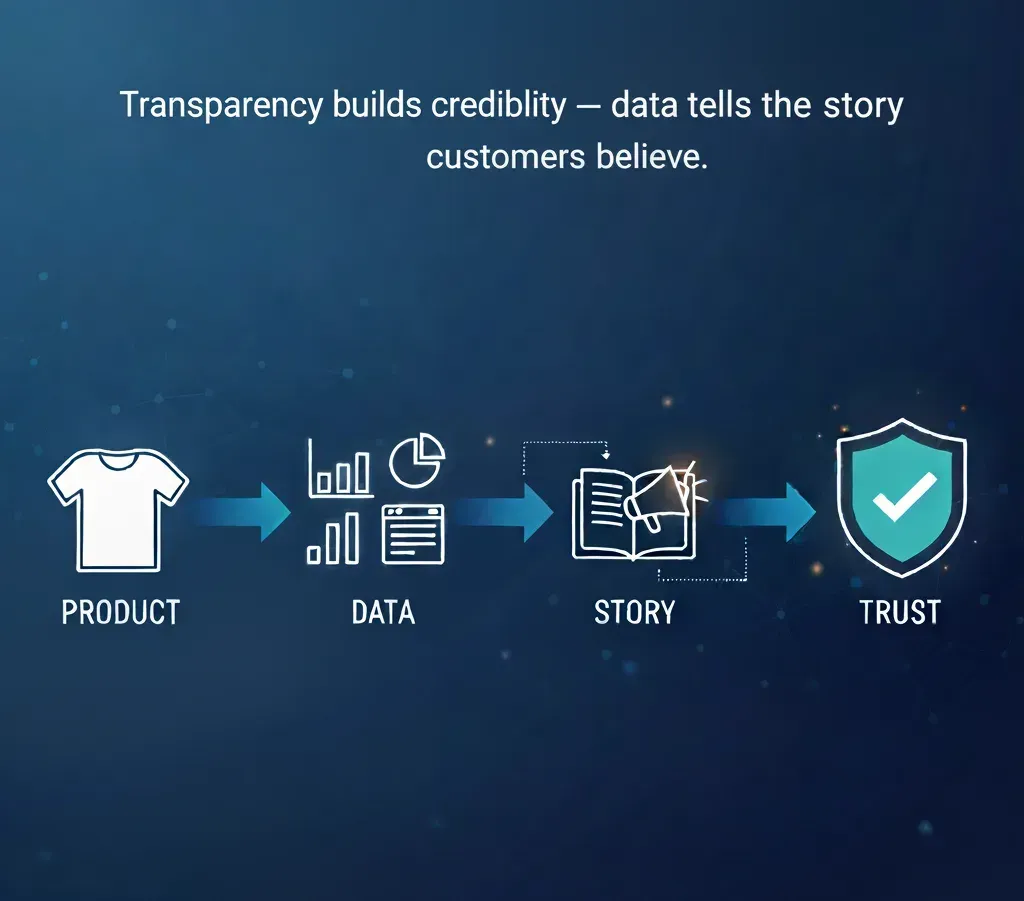
Marketers are now curators of proof. Real-time product details — from sourcing and pricing to user reviews and carbon metrics — become chapters in a narrative of accountability. This shift elevates storytelling from subjective creativity to measurable credibility.
Real-World Examples
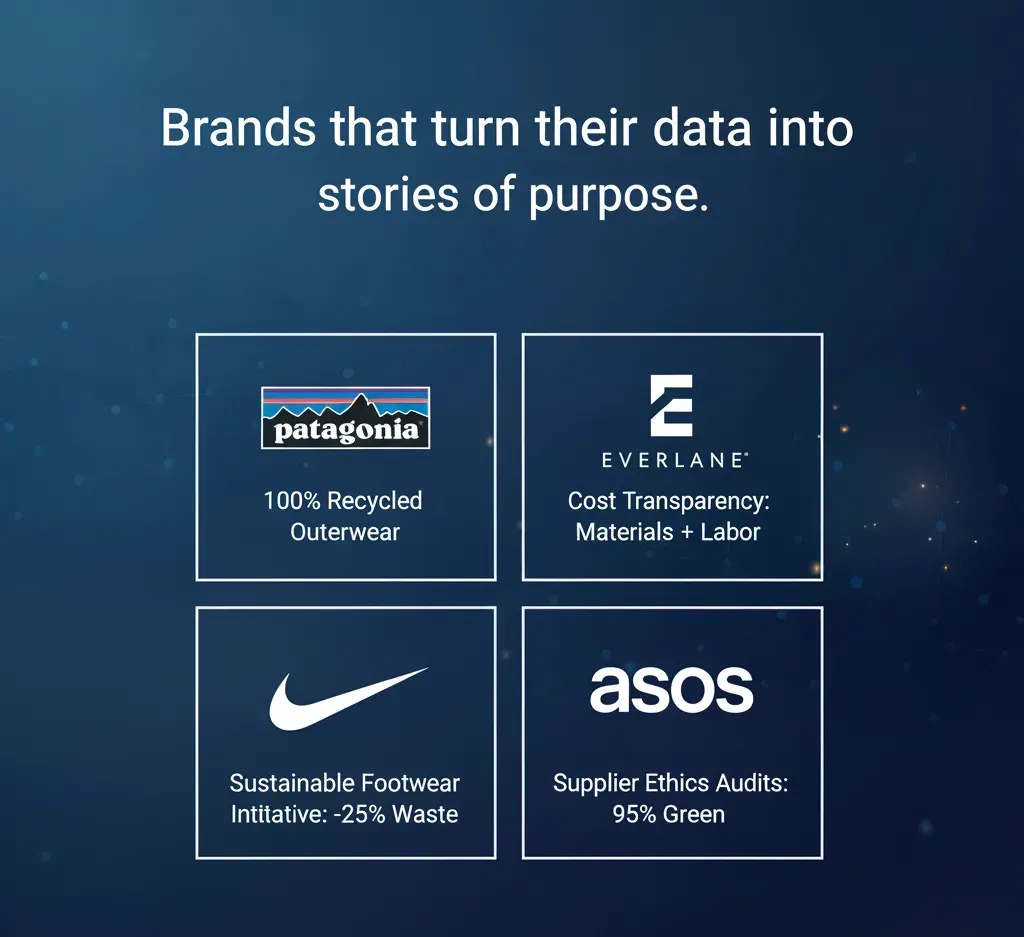
- Patagonia demonstrates how verified environmental data can become brand storytelling gold. Each product is connected to an interactive supply-chain map showing where materials originate. The company reports its sustainability metrics publicly and ties them to clear performance indicators. For Patagonia, transparency is not an afterthought — it’s the product.
- Nike leverages performance, innovation, and athlete testing data to tell stories that fuse science with aspiration. Its product R&D insights fuel narratives about human achievement, illustrating that every gram reduced or fabric enhanced is driven by measurable research.
- Everlane pioneered “Radical Transparency,” publishing factory details, cost breakdowns, and sourcing impact. By sharing actual cost-to-consumer data, the company reframed what honesty in fashion looks like and built enduring trust with ethically-minded shoppers.
- Lenskart and ASOS collect and analyze customer-review data at scale to refine product messaging and address concerns proactively. ASOS’s transparency campaign, for instance, uses aggregated customer sentiment and quality insights to improve both product design and communication.
How Web Data Feeds Brand Purpose
Internal metrics aren’t the only storytelling assets. Ethically collected web data—such as public product details, competitor benchmarks, and social sentiment—provides a richer, more contextualized foundation for brand narratives.
According to PwC’s Consumer Intelligence Report, 87% of customers say they research brand credibility via public information before making a purchase. That external scrutiny pushes companies to be more forthcoming.
By scraping publicly available data responsibly, brands can evaluate industry transparency, identify differentiators, and detect market gaps. Imagine a sustainable footwear startup analyzing open product data from competitors to discover that consumers favor clear climate-footprint labeling. The brand could then feature verified emission data on its own packaging and website — transforming analytics into storytelling that resonates with real demand.
“By analyzing publicly available product data, brands can identify which features resonate most with consumers — and turn those findings into value-driven stories.”
Such insight-driven storytelling helps companies shift from brand-centric narratives to consumer-informed ones. It’s not about what the brand wants to say — it’s about what the data shows people care about.
Building Trust Through Transparency
Transparency isn’t merely a communication tool; it’s an economic asset. According to Edelman, 81% of consumers say they must trust a brand to purchase from it. That trust grows when brands demonstrate accountability using verifiable data.
Transparency builds long-term resilience because it converts vulnerability into authenticity. When companies admit challenges — for instance, showing that supply-chain emissions are still being reduced — consumers perceive realism rather than weakness. This “show-your-work” approach mirrors academic honesty: every claim is supported by data, reinforcing credibility.
Deloitte’s 2025 Insights on Ethical Consumption found that 63% of customers prefer brands that disclose their environmental or social challenges, as it signals genuine intent to improve. The implicit message: transparency is the new creative currency.
Consider the difference between saying “we’re sustainable” and publishing a live environmental dashboard linked to product life cycles and supplier audits. The latter transforms transparency into an ongoing dialogue.
Trust grows when audiences are treated as active participants in a brand’s journey. Data-driven storytelling invites that participation, encouraging customers to follow along, engage with updates, and hold brands accountable.
The Road Ahead: Purpose-Driven Data Strategy
As the line between marketing and ethics blurs, data openness will become a cornerstone of brand strategy. Rather than guarding product or supplier information, forward-thinking brands in 2025 and beyond will use it as a differentiation tool.
Future consumers will expect real-time access to performance and sustainability metrics. Data from energy use, water consumption, ethical labor audits, and product life cycles will become public indicators of brand character. Transparency will be not just “nice to have” but the price of market entry.
According to Accenture Strategy’s latest Purpose Report, brands that demonstrate measurable commitment to transparency experience up to 3.5x higher customer loyalty scores. That loyalty translates into tangible growth — proving that purpose and profit now move in parallel.
For marketers, the call to action is clear: treat data not just as an analytical tool but as a storytelling voice. Develop purpose-driven data strategies that unite marketing, sustainability, and data science functions. Empower teams to translate numbers into narratives that express human impact.
The real challenge ahead isn’t collecting more data — it’s communicating it clearly, ethically, and empathetically. Brands that master this will become trusted interpreters of their own truth.
Conclusion
Product data is no longer confined to back-end systems or pricing algorithms — it’s the foundation of how purpose and trust are built in the digital age.
By bringing transparency, ethics, and emotion into harmony, data transforms from a cold metric into a living story. The brands of tomorrow will be those that can show — not just say — why they exist, what they value, and how they act.
In this new era of data-driven storytelling, truth has become the most valuable brand asset. When shared openly, it not only inspires consumers but also holds companies accountable to the values they promote.
To explore how Datahut’s data solutions can help your organization uncover, structure, and use insights to tell honest, trust-building stories, start your purpose-driven transformation today.
FAQs
1. What is data-driven storytelling and why is it important for brands in 2025?
Data-driven storytelling is the practice of using verified data to create authentic, value-based brand narratives. In 2025, it’s essential because consumers demand transparency — they trust brands that back their claims with facts and measurable actions.
2. How does data transparency build brand trust?
Transparency builds trust by proving accountability. When brands openly share data about their sourcing, sustainability, or performance, they show honesty and credibility — qualities that strengthen long-term consumer relationships.
3. What are examples of brands using data-driven storytelling successfully?
Brands like Patagonia, Nike, Everlane, ASOS, and Lenskart use data storytelling effectively. They disclose metrics such as supply-chain origins, carbon impact, or customer review insights to engage audiences with facts, not fluff.
4. How can web data enhance brand purpose and storytelling?
Ethically sourced web data provides real-world context for brand decisions. It helps brands benchmark competitors, analyze consumer sentiment, and discover new transparency opportunities — transforming analytics into meaningful stories.
5. How can businesses start using data to build brand trust?
Start by identifying what data aligns with your brand values — such as ethical sourcing or sustainability metrics — and share it openly through dashboards, reports, or campaigns. Partnering with data experts like Datahut can help structure and communicate those insights effectively.


